Showing posts with label Batteries. Show all posts

Sunday, 19 March 2023

Do you want to run an Inverter

 The Inverter is an electronic device that converts a DC voltage to AC voltage. Cruisers usually want to convert ships 12 volts DC battery power to 110 or 230 volts AC. 

 We love having an inverter on board and it gets used on a daily basis, we do use the inverter to power the washing machine, kitchen and workshop tools and it really makes our life on board easier . 


A bare bones Pure Sine Wave inverter fitted in Matilda. 

This inverter is a combi unit and includes a built in battery charger for when we are connected to the shore power at the dock. By bare bones I mean it does what its meant to do very well, it outputs a single phase  pure Sine Wave and charges the batteries when connected to the dock power. It doesn't have a lot of the bells and whistles that most cruisers dont really need. While they may be necessary for complex installations, for most of us they are unused and are just an added expense and that money could have been used elsewhere.   

--------------------------------------------------------------------------------------------------------

Before we get started basic abbreviations and power rating.

A well used electrical calculation:  Watts = Voltage multiplied by the current in Amps;  W = V x A

AC is an abbreviation for alternating current:   an electric current that reverses its direction many times a second at regular intervals, in Australia its 50 times per second and in the US its 60. also known as Hertz or Hz. Output is from a portable generator, inverter or mains (the big generator at the power station) 

The AC wave form, output from a Sine Wave Inverter or generator. 

DC is an abbreviation for direct current: an electric current flowing in one direction only. Output is from solar cells, batteries. 

RCD Safety switch: An RCD switch will operate when there is an imbalance in the current flow in the active and neutral conductors. Once this imbalance reaches the set threshold, usually 30mA, it opens the circuit, cutting the power output.  A lot of people believe that an inverter is safe and will cause no harm because it runs off batteries. However this is a false sense of security, the power from even the smallest inverter can kill as quickly as a mains power point. So it is certainly recommended a RCD safety switch be fitted.  For a discussion on safety switches
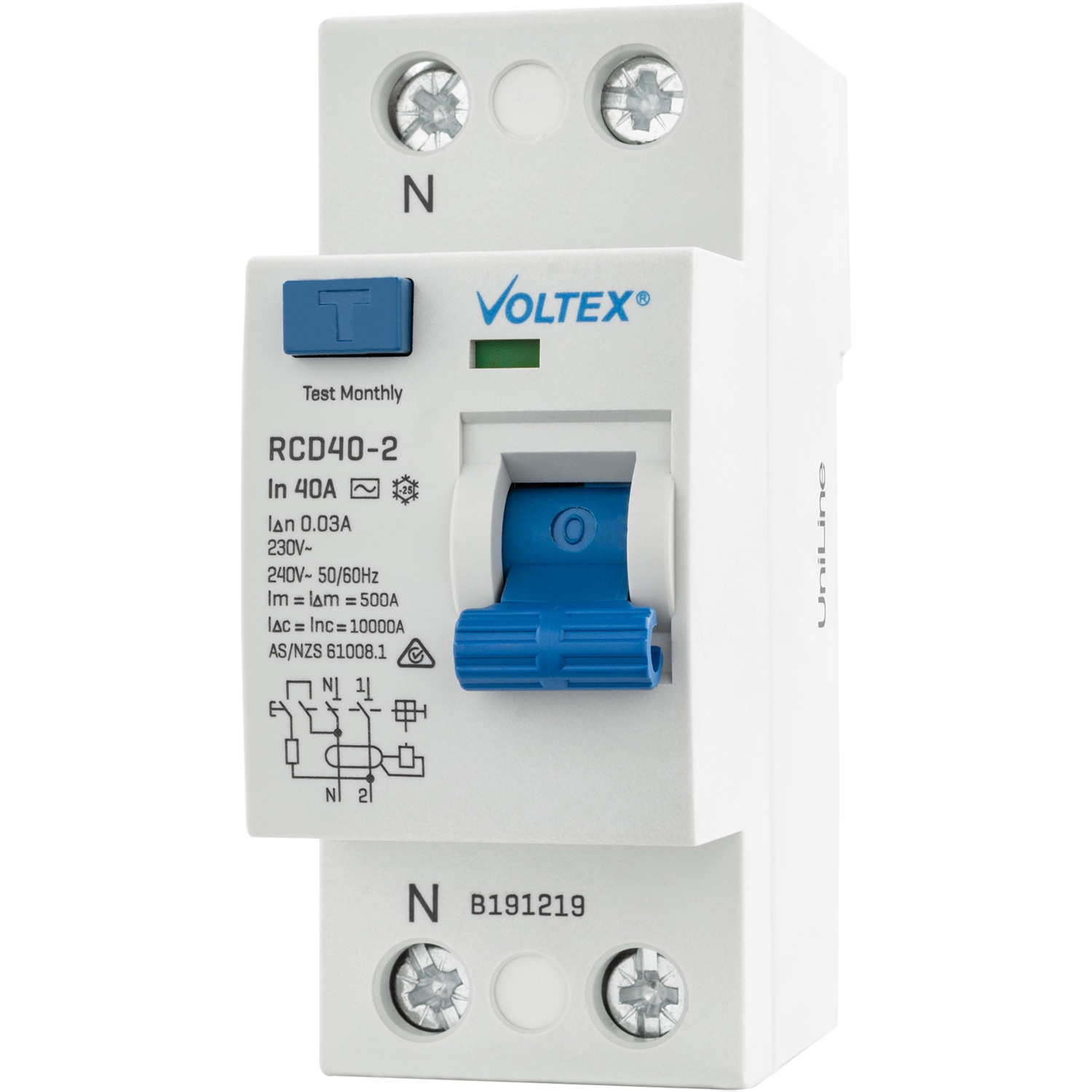
RCD Safety switch to reduce the chance of being electrocuted from the output of an Inverter

--------------------------------------------------------------------------------------------------------- 

Why have an Inverter when you go cruising?

In Australia we all have 230 volts AC as the primary mains voltage source at home, we already have many appliances that run off 230 volts, it may be the high powered microwave oven or the very low power charger for a laptop, tablet or camera. An Inverter allows you to use the appliances you already have when you are away from the shore power. The disclaimer here is that the inverter type and size has to be matched to the appliances you want to use.

Benefits of using an Inverter

Instant power with the flick of a switch, no turning on the gen set, or switching over the source of the power. The main reason for most people is that there is a wide variety of appliances. Using an Inverter can save you the cost of replacing the appliances you already have at home with 12 volt equivalents. In some cases 12 volt appliances are more expensive due to lower sales, or possibly they are not available for every application.

Why a lot of Cruisers buy an Inverter

A lot of cruisers like to take the convenience of household appliances out on to the water with them. There are so many appliances used in the kitchen or workshop that make quick work of tedious jobs. I use a powerful mixer on a daily basis to knead bread dough so we can have a fresh loaf of bread while we sail offshore miles from land. Using the appliance we reduce the kneading time from 20 min to just 5, not that we don't like the upper body workout, we like using that time to do other jobs. There is just about an appliance or power tool to help with most jobs, and we have met people who use some appliances we never thought of taking on board, it's only limited by imagination, storage and of course battery bank endurance.

During our travels we have met with dozens of cruisers who had planned fitment of their inverter during preparations before going cruising. The cruisers then executed the install and had the 12 volt side of the inverter connected with the right gauge wire, fuses and safety grounds. They can also have wired in power points outlets to make the inverter use convenient. By having the inverter properly installed they were able to install and configure a RCD safety switch and circuit breakers to protect the people and appliances. Add on kit for an RCD info here

There is also another good reason a lot of people buy an inverter, they do not know there are 12 volt alternatives for the most commonly used items. So what are these commonly used items? most of the time its battery chargers (phones laptops, cameras) and TV’s, and this is why so many people buy an inverter, they head off to the marine/camping/electronics/tech shop to get something to charge their laptop, phone or even the head torch, and really the list is almost endless these days. The sales person quickly takes the customer to the inverter section and gets a quick sale. The customer goes home not realising there are other products out there that can charge and run their small appliances and in nearly all cases are a lot safer and much more efficient at doing it than an inverter. But more on that in another post.

Being on a yacht we want products that make use of stored electricity in the most economical and safe way. Unfortunately for just charging laptops, phones and these types of appliance, a small inverter isn't always the best and or safest option. This is why we feel its a great idea to have a balance of electronics to do the jobs on board. This way should the inverter fail (happens from time to time) you can carry on with minimal disruption. 

Please read on, for other uses an inverter can come into its own, if set up correctly.

Operation

A great reason for using an Inverter is, being much quieter than using a generator to produce the AC power, and when your running off batteries, there are no concerns about fumes or heat from the exhaust, and no flammable fuel to handle. If the generator isn't built in and running on the ships fuel, most of the small portable generators popular with cruisers run on petrol. This adds the complexity of firstly safely storing the generator and secondly the fuel to run it. The storage of petrol does have its complexities on a vessel designed and fitted out as a diesel fuel craft.

Versatile

An Inverter can be used whilst the vessel is running, and therefore not draining the house battery. Unless your a sailboat and having a good day out in a nice breeze. When motoring this has practical applications; ie arrive at the anchorage with fully charged batteries, camera batteries, laptop, and so on and so forth. 

For safety an Inverter must never be switched on when you go to start the engine unless you have a totally isolated motor start battery. If you don’t the surge of current required to start a boat motor can drop the voltage down below 10V DC. After the motor is running and the alternator kicks in, it will surge back up to 12 V DC, the combination of surges can damage the inverter, the appliance running on the inverter at the time or of course both.

Interpreting the numbers written on the inverter

An Inverter changes the voltage and current, the power it puts out is always less than the input power, due to inverter efficiency being less than 100%. Most, but not all inverters list the operating power in watts, a big inverter may output 2500 watts so if it really is outputting 2500 watts at 230 volts that will be 10.86 Amps output, just over the maximum of a standard power outlet in Australia. This large inverter is capable of running most appliances easily. However keep in mind most of the numbers on the case i.e. 2500, the inverter will not really output 2500 watts. One that I know of will output 2300 W and another that has 3000 on the case outputs 2200W, so the reality is that you need to read the spec sheet to see the real out put value.

On the other end of the inverter scale is small inverters with an output of, for example 300 watts, this will be 230 V at 1.3 amps, and would be enough to run most laptop chargers. 

An inverter is usually between 80% and 90% efficient. The 10 – 20 % of power that is lost as electrical energy escapes as heat energy in the Inverter. While this doesn't sound too bad if you crunch some numbers when operating at higher power it can be a significant current (in Amps) drawn from the batteries that is wasted energy. 

So as an example of power loss, if an inverter is drawing 100 Amps and is 80% efficient then 20 amps  will be wasted power and converted into heat. 

Electrical Power

Electrical power is usually measured in Watts (1000 W = 1 kilowatts, 1 kW). So to keep it simple an inverter that outputs 240 volts at 10 Amps is 2400 Watts (240V x 10A =2400W)

Some Inverters output are rated in VA (Volt-Amps) rather than Watts and for many appliances this will equate to the number of Watts with a power factor of blah blah blah, well beyond our ability to calculate the actual value. The simple truth of the matter is VA means nothing. If you want to know how much power your inverter is going to give you then ask for the rating in watts at 40 deg C, all the other ratings should be kept for the fairy tale books where they belong. Some brands of inverters have a lower value in the model name but, in fact, are the more powerful of the bunch when apples are compared with apples (watts with watts). So shop around for a unit where you get what you think you should be getting, and it does what it says on the box it does. Do the comparison in Watts at 40 deg C apples with apples, (watts compared with watts). I do know some manufactures use lower temp rating to give better figures, however unless your operating your vessel in the lab then the 25 deg C isn't really achievable. Its all in the advertised wording. 

Peak and Continuous

Two numbers are used to describe the output of an Inverter, Peak and Continuous.

Peak (or surge) describes the output deliverable for several seconds the Inverter components won't blow up at that amount of load, but they will heat up really quickly. Continuous ratings are usually limited by the heat that needs to be removed when running continuously. Ideally you would find out the Peak and the instantaneous ratings of your appliances and check that they were less than the Inverter output, but you can't rely on this because most appliances don't state the start-up or peak power and the length of the peak really needs to be known too. Unfortunately, the only way to be sure, is to test the appliance with the inverter.

For safety never run the inverter continuously at full power for long times, I have a safety margin in the order of 10% factored in to our calculations for long run times as this allows for the odd surge. 

Size of Inverter Needed

The following table is only a rough guide as there is a lot of variation in startup surge load and continuous load for similar appliances between makes and different models.

Size of Inverter Required Type of Appliance

150 watts - Charger for cameras, laptops, some power tools, DVD player; coffee grinder
250 watts - TV, slow cooker, desktop computer, electric blanket, kitchen mixer, printer
500 watts - Small fridge, freezer, small angle grinder, drill, TV, washing machine (no water heater)
1000 watts - Bread maker, low power microwave (some microwaves are very hungry appliances).
1500 watts - Small air conditioner, vacuum cleaner, small iron, pie maker
2000 watts - Microwave (1200 watts), hair dryer, fan heater, iron, electric kettle, toaster

Types of Inverters the all important “Wave” output

When generating AC from a spinning generator, it’s very easy to generate the sine wave that AC has, but when inverting DC to AC, the easiest wave shape to output is a square wave. Unfortunately a square wave has more energy for longer at frequencies other than the 50Hz or 60Hz (Hertz or Cycles per second), and this can cause problems of overheating in transformers and some motors.

A sine wave, this is the same power wave output at the mains power point on shore and is the same as output by a rotating AC generator, or a Pure Sine Wave Inverter. 

A comparison of the three waveforms laid on top each other 


Today Square Wave Inverters are rare except in the smaller sizes or the real cheap ones and most output either a Modified Square Wave (MSW) or a Sine Wave/Pure Sine Wave. Inverters advertised as Modified Sine Wave are just a marketing department creation and are really only a Modified Square Wave. Nevertheless modified sine wave (MSW) does have a good ring to it when you have been told that the sine wave unit is the best one to get.
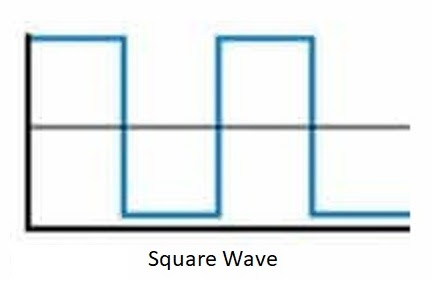
A square wave display, as can be seen this wave form quickly switches between positive and negative and stays positive or negative at full power for longer, this quick switching can overwhelm some electronic appliances connected to the inverter.  


Most small plug in pack chargers and power supplies for cameras, laptops etc these days use switching or switch mode power supplies. So how do we know if this is the case most of the time its in the weight, feel the weight of it and if it feels like it is full of copper wire it more than likely has a conventional transformer in it (most probably needs Sine Wave), if it is much lighter, then it is a switch mode. In theory the switch mode power supplies should work ok on any wave shape input, because they firstly convert the AC to DC, however if the components inside aren’t rated adequately, they may overheat due to the quickly fluctuating square wave shape.

Modified Square Wave Inverter (MSW) A.K.A Modified Sine Wave Inverter (MSW)

Most appliances will work from these basic Inverters, but unfortunately unless you can look at the internal electronic design of the appliance, you can’t be sure if you will really need a Sine Wave Inverter. The squarish wave shape can also confuse the timing circuits in some appliances that use Frequency as a timing control. If the appliance doesn’t work normally or makes unusual noises, then disconnect it or you may have expensive damage. 

These Inverters also generate more interference to TV's, AM and HF radio reception than Sine wave Inverters and can cause buzzing in CD players and stereos. 

When using an inverter in the marine environment tests need to be carried out to make sure the inverters electrical noise isn't enough to compromise reception on VHF frequencies used for radiotelephone, Digital Select Calling,(DSC) and Automatic Identification System (AIS).

Modified Square Wave AKA Modified Sine Wave, as can be seen this wave form is certainly has a lot quicker notchy rise and fall times when compared to the Sine Wave gentle undulation of rise and fall. Also keep in mind the number of additional steps in the modified square wave will influence how the inverter and connected appliances will perform. 

Electric motors for an example in washing machines, bread makers, power tools, microwaves, vacuum cleaners may give trouble if used with a modified square wave inverter. 

Can I run computers with my modified square wave inverter? Most laptop/notebook computer AC power adaptors work perfectly well with the Modified Square Wave Inverter. Desktop computers and some laptops/notebooks may be more sensitive so they may not function correctly or cause a humming noise, in which case a pure sine wave inverter is recommended.

Mac/Apple products are extremely sensitive in the way they use their power, and will require a Pure Sine Wave Inverter to run successfully. We also found a good power filter was also required when using apple products. 

You may have trouble using an AA battery charger with any inverter due to the way the battery chargers draw energy. You will also find that a pure sine wave inverter is a better option for battery chargers due to the fact that there's much less ‘electrical noise’ interference compared to a modified square wave inverter. This ‘electrical noise’ can often wear away at the sensitive components in lower quality battery chargers. The rechargeable batteries, recharging transformer and Inverter may be damaged when trying to recharge devices of 10 volts or higher.

However, it is always a good idea to double check your appliance's manufacturer's guidelines first. If they can't be charged via a modified sine wave inverter, they will mention something similar to "Charge via Mains power only" or not as we have found out.

Sine Wave Inverter (marketed as Pure Sine Wave or Pure Sine or even the S model)

Sine Wave Inverters are more expensive than Modified Square Wave, some times up to twice as much because more components are needed to electronically generate the Sine Wave. You may consider that If the appliance has a Transformer or an Induction Motor think washing machines and appliances listed earlier, then it most probably needs a Sine Wave Inverter to prevent overheating. Now this is not always true, since some fridges and freezers can work fine off Modified Square Wave inverters, and in fact you shouldn't really notice any difference powering a fridge from a Modified Square Wave inverter, however the notchy waveform can interfere with timing circuits.

The wave form output by the an inverter, same shape as the mains power from shore. 

-------------------------------------------------------------------------------------------------


A list of optional features that are listed as inverter options/specifications.

Isolated Input-Output
If you are using only double-insulated appliances (i.e. they have no third Earth-pin on the Mains plug) with your inverter, then it doesn’t matter to the appliance if the inverter has total electrical isolation between the DC input and AC Output (provided there is no fault to earth). In larger installations with an earthed neutral, or if you have earthed appliances such as Washing Machine.  If the Inverter input and output is not isolated, the DC input (battery power 12V) will be up to 115-120 volts AC above the mains earth and this is a very dangerous situation. The out come could be …….. see the next

Electrocution I am lead to believe from years of health and safety briefings it only takes 35 milliAmps (that's 0.035 Amps) in the right conditions to kill a person. The 230 volts from an Inverter can kill you instantly, just like the 230 volt at home, so you need to take precautions. So if you do purchase an inverter that doesn't have total electrical isolation between the DC input and AC output there are several things to do for your safety.

1. Don't use it, return it to the store for a refund, probably the safest but most ignored advice.
2. Make sure the appliance you use doesn’t have an internal connection from earth to neutral.
3. Make sure any appliance is double insulated and does not have a ground pin on the plug.
4. Never make live connections e.g plug in the appliance when the inverter is running.
5. Never disconnect a running appliance with the inverter running.
6. Never work on the batteries or battery connections with the inverter running.

Earth leakage protection or RCD (residual current device)
Bigger Inverters may have these built in, however if not, there are kits available so it can be easily added so operators (consumers i.e. you) are protected by an RCD safety switch and overcurrent circuit breaker. However you cannot get this level of protection unless the inverters input and output are isolated.
A RCD safety switch, while we will never know for sure, we believe it saved us from a nasty accident when our washing machine developed a fault, and another time when I accidently dropped the hand mixer into the sink full of water and with out thinking tried to stop it sinking. 


Earth – Neutral link
An automatic earth to neutral link when on inverter mode (no shore power). When disconnected from shore power the unit makes the earth to neutral connection so RCD safety switches can operate.

This feature is also very important if the inverter is also a battery charger when plugged in to shore power. Most are marketed as combi units to designate an inverter and battery charger combination. When the unit is plugged into mains power the connection from earth to neutral is turned off to make use of the earth to neutral link from the shore power receptacle/power box, this enables the shore RCD safety switch's to work. 

Soft Start
Some loads draw much more current when starting up compared with steady operation e.g. an electric kettle draws a lot more current when first turned on, and motors can also draw very high currents as they come up to operating speed. To reduce these massive current surges, some Inverters bring the output voltage up to full voltage progressively over several seconds. This means you will be able to use an Inverter with a smaller continuous power rating, for a particular load.

Low Voltage Cut Out, Shutdown or Battery Disconnect
To prevent damage to your battery, it’s important that the Inverter can switch itself off and remove all current drain, when the battery voltage drops below a set limit. It helps if the cut off voltage can be set by the user, based on the type of battery. Keep in mind that as battery voltage drops, the inverter will draw more current to keep the output power constant. This means that voltage will drop a lot quicker as it reaches the point of full discharge, therefore manual monitoring of battery voltage is not really practical.

Automatic Fan Cooling
To keep the internal components operating properly the waste heat in inverters must be controlled, it is imperative to have an internal fan that is automatically switched on at a set temperature when needed.

Meters 
You can get by without voltage, current and a frequency meter, but with them it’s easier to check if your system and appliances are healthy, or if you’re close to overloading your Inverter. 

Autostart (may go by different names)
Some larger Inverters automatically can sense when any appliance is connected or switched on, so that the inverter only draws significant power when it’s actually needed. This is particularly useful in larger vessels, caravans or buildings, because you don’t have to switch the Inverter off and on when using appliances.

Not all manufacturers include an Auto start feature especially when it comes to Pure Sine Wave inverters, some have a hard wired remote and the more modern units Bluetooth. The major drawback to this auto start feature is the power used while in standby. This can be significant and should be included in the planned daily power usage.

Remote Control
For inverter installations in vessels, caravans or buildings, it’s handy to control and monitor it remotely, the inverter should be mounted in a cabinet near the batteries to simplify and shorten the wiring necessary to connect the batteries to the inverter. Installing the inverter close to the battery, will allow you to minimise the amount of heavy cabling that is needed in the 12 volt part of the circuit. For operations the remote should also function to alarm fault conditions to the operator.

Inverter/Charger (combi units)
For permanent Installations, the Inverter may be able to charge the batteries when mains or onboard generator is available. These units are sold with a variety of current outputs for the charger, most have the function to connect a remote monitoring panel. Most are advertised as Combi units due to the combination of charger and inverter. They can simplify the connection of shore power due to being an automatic switch between inverter and shore power. No need to clunk over a heavy duty switch to select shore power or inverter. A separate battery charger is no longer necessary.

Some units also switch the Earth Neutral connections so RCD switches work as intended, very important for crew safety.

Overload cut-out
The more sophisticated inverters will protect against over temperature, current, voltage or under-voltage, any of these conditions can cause damage to the inverter or the appliances connected to it.

Overheating of Inverter & Wiring
It’s important not to install Inverters in confined spaces where the heat can’t escape, either through air movement or conduction. It’s very important not to cover the case of the inverter or obstruct any fan intake for example by mounting it too close to a bulkhead or furniture. Never mount an Inverter in the engine compartment, I know some vessels have very large engine bays and I would make sense to mount them in this space. However a separate well ventilated insulated compartment should be constructed to keep the heat of the engine room from entering the well ventilated cabinet.

Twelve volt inverters, can draw high current from the battery banks, the general rule is to divide the output power by 10 to understand how much current will need to be supplied. So a 1000 watt inverter will draw 100 amps from the battery and this means using battery cables which can supply this level of current without overheating, while also keeping total voltage-drop in the positive and earth lead to less than 1.5% in each - i.e. less than 0.2 volts.

Inverter Grounding

I am sure most of us know the high voltage of the AC system presents a shock hazard and can certainly be lethal. The DC system is not normally an electrocution hazard but can provide a lot of current, and so is potentially a source of fire. A suitable ground must be installed between the AC and DC system. During my inverter fitment I noticed in the operating instructions the requirement for grounding connections on both the AC side and DC side of the unit’s case. This grounding can prevent shocks from AC, and fire hazard from DC. 

My previous unit only had the  smaller AC grounding connection made. A fault in the DC side of the system could provide enough current to overheat the AC grounding conductor (think enough heat to melt insulation and start a fire) without blowing the large DC fuse. Keep in mind the fact that the AC ground is not fused and current will flow through the conductor until it burns out. A high amperage capacity DC grounding path back to the DC system should be made. The conductor size for the ground needs to be of sufficient cross sectional area (bigger is better) to be able to sustain enough current to blow the supply fuse.

The installation instructions for older inverters (as I had previously) typically do not include this precaution, but most newly designed units do. Though looking into some different manufactures install instructions this connection is not addressed in any depth, most only state or draw the connection in on the installation schematic. Due to the fuse size in my inverter we needed a 70 mm2 ground wire for the DC ground. 

Limitations

Battery capacity

All the power for the load has to come from the battery, so with high power Inverters or appliances you want to run for a long time, you need large battery banks. If you wanted to run a small Air Conditioner that used 1000 watts on average, it would draw 84 amps, so you need to have a battery bank capable of supplying 2000 amp hours in a day. However we are not done yet, we still need to factor in the losses incurred (the 10-20% mentioned earlier) by running the 12 V DC through the inverter to output 230V AC the figure would be closer to 2400 amp hours draw on the batteries. That means big, heavy and expensive batteries, more importantly a way of recharging them or keeping them charged.

----------------------------------------------------------------------------------

Alternatives to an inverter

Use 12 volt appliances

Many appliances are available as both 12 volt DC or 230 volt AC versions, but the 12 volt version uses less power and is always more expensive. A 12 volt fridge will mostly have thicker insulation and use a more efficient motor/compressor. The designers of mains powered appliances don't factor in the same level of efficiency as they do for 12 volt powered appliances, due to the design spec being for an unlimited mains power source.

A 12 volt electric kettle will use less power because there are no losses in converting the 12 volts to 240 volts first, how ever a lot of people don't actually realise how much power an electric kettle draws and the install of the unit can be more expensive due to power cable size. Using only 12 volt appliances, may reduce your power needs, so you won’t need a generator or run the motor to recharge your batteries on shorter outings. However you need to ensure you use heavy enough cable to run the appliances connected to them. 

Generator

These can easily generate the high power level often needed and they produce a 230 volt output directly. However an inverter is totally silent and much smaller than a generator and doesn't need regular servicing. Keep in mind that most portable generators exhaust can output deadly carbon monoxide gas and in the right conditions this lethal gas can find its way below and slowly kill you while you cook dinner or have a few beers.


Friday, 10 August 2018

Cruisers Power Basic's


Over a few drinks at sundown I was talking with a few fellow cruisers about conserving power. However before we go much further I think I better clarify that last sentence, I guess it wasn’t conserving power as this would in most cases mean rationing or doing without. The reality was I was more concerned how they reduced their power usage so they could enjoy what they were doing while maximising the usage of the power store they have. On a vessel this is not always easy to do, reduce power usage while still running the assortment of electronic gadgets that we now take for granted. Its things like our TV, stereo, e-reader, phone, laptop and tablet, we are not going to leave them behind just because we are out on the water.

Preliminary checking
First of all you will need to take control of you’re on board power and manage the usage. To manage a resource properly will require some way to monitor the usage. Power monitors are available to do the job for you. In the past you would need a good quality volt meter and amp meter to keep track of what was happening. Reading the voltage at any given time could give you a rough idea of the percentage of power left in the battery bank. Unfortunately the bank could not be undergoing charging at the time or the reading would not be valid. The modern battery monitor with a simple microprocessor control can quickly keep track of the amount of power coming and going (sometimes both at the same time) and give you a fairly accurate window into the amount of available power in the battery bank. This is important with today’s systems where power to charge the batteries can be available day or night.

While this power monitor is old school it does a great job keeping track of our house and start battery


One of the best things you can do for your self is to check for unaccounted power usage, and leakage current problems. To start the test will require you to disconnect all your charging sources. In most cases this would be the shore power battery charger, solar panels and the wind generator. For the purpose of this test don’t run the motor, I am assuming it has an alternator.  What you are looking for is a zero current in or out on the amp meter/power monitor. Unfortunately the power monitor will consume some power but it should be minute. So after turning off the all the charging sources and power switches wait for everything to settle. After an hour with nothing turned on your amp meter should read the minuscule amount of power needed to run the monitor. It is important on a vessel to know when the power is turned off there isn’t any stray leakage firstly drawing current from the batteries, but secondly doesn’t have the potential of causing problems with the metal fittings on the boat. While doing the test remember that most boats have a maintained supply that may bypass the main circuit board. This maintained supply powers things like your electric bilge pumps, gas monitor and power to the memory in your stereo so when you turn it on next it knows what the programed stations are. If you have a high current draw when doing this test look at the maintained supply and you may need to disconnect it for a short time. But really the maintained supply shouldn’t be the source of heavy current draw, it should be milliamps unless something is running.

We also went through the boat and tidied up the connections and re-run wires correctly. Connections on bus bars and terminal strips were opened cleaned  then re-tightened, then after a very light coating of synthetic grease was applied to keep out moist air. Its better to do the connections up dry and then coat over the top to keep the the connection dry. All this work took a while and only a small section was done at a time, as its very time consuming.  This was especially true when we had to rework sections that the previous owner had paid professionals to fix or do installs and upgrades (degrades would be more like it).

Our electrical cabinet after we purchased the vessel, vomiting a techno colour of wire, yes that's an AC circuit breaker that had been placed in the middle of the all this DC.
Believe it or not some of this work was done by  supposedly skilled but certainly well paid professionals.


After a tidy up, connections cleaned and the wires re routed and tied up to stop vibration fatigue.
After a tidy up the cabinet is looking in much better condition now.

Charging the Batteries
There are several options and we have found that it is best to have a balanced charging scheme.  Fit a high current aftermarket alternator controlled by an external smart regulator to your engine. A high current output will supply more of a charge in the short time most sail boats run the engine for. Solar panels are very good and the more of these you can fit sensibly the better. To finish off the solar installation, pair the panels up to a MPPT regulator to get the most out of the panels. Then to add some redundancy top it off with a wind generator, there are several models to choose from, but a wind generator that starts producing power at low wind speeds is good. From experience we have found a balanced system works, don’t put all your eggs in the one basket so to speak. There will be days where the sun doesn’t shine and days where the wind doesn’t blow. But it’s rare to have both missing. We have also found the wind generator is great when motoring along on those doldrums days, if the wind generator kicks in and produces power there is enough wind to sail.


Four solar panels almost half a kilowatt

Wind generator gives great power output even here in Asia
High output aftermarket alternator with serpentine belt kit to stop belt slippage and wear

Reducing power consumption

Lighting
Replacing your incandescent bulbs with LEDs is without doubt one of the most significant power saving projects you can embark on. As an example we can run five light fixtures with LED globes for less power consumption than one incandescent bulb. We didn’t just stop at the internal lights we also replaced navigation and anchor light fixtures with LED units. Now we don’t need to worry about the current draw of the navigation lights any more. With all the LED bulb types coming on the market now changing the bulbs in a standard fitting over is not the specialist job it was once. Take a sample of Bulbs to your local supplier to get the right pin and globe size. I have noticed the prices for LED globes and fittings have really come down so do your homework identify your globe type and shop around. While fluorescent lights do a fantastic job of reducing power usage they have been known to output RFI (radio frequency interference). Why is this a problem? The interference has the tendency of causing sensitive electronics, like navigation instruments to malfunction. When using the VHF or HF radio the interference can be picked up in the radio and garble the transmitted signal, the receiving stations will then have trouble understanding what you are saying. Or cause interference in the receive circuits of the radio and you may not understand what is being said.  Possibly the worst I have seen is a fluorescent light that would stop the TV receiving any stations, it took a fair bit of hair pulling to sort that one out.
Led Bulbs for house and navigation lights

Communication & IT
You no longer need an inverter to run a Laptop/USB/phone charger. First up USB chargers, auto stores and most chandlers carry various USB chargers that can be mounted in the same size hole as the old cigarette lighter socket. There are also small units that plug in to a car cigarette lighter socket.  You will need to know the output current so you can match it to what you want to charge. Shop around, a heavy duty dual USB charger socket with an output of 5 Volt / 2.5 Amp has an output capability of 2.5 Amp (12.5 Watts) from one socket. This is the correct output required to charge your iPad/ Android Tablet/eReader at the full, normal rate, or 2 iPhones/Android Phones /iPods/MP3 players simultaneously. Yes our USB outlet can even charge up our Samsung phone, a lot of standard USB chargers wont. The good thing is that DC-DC convertors can be very efficient and I have seen specifications stating some are 95% efficient, meaning the loss of conversion can be as low as 5%, not bad if compared to the losses incurred by an inverter (DC-AC converter) that can be as high as a 50% loss using low power devices.

Fitted USB charger 10.5 watt output top, cig lighter sockets below for laptop chargers
AC USB charger on the left, 5 Volt 1 Amp output, On the right USB Charger with an equivalent output, only requires 12 Volt DC.

Laptop chargers; on the right is an AC unit, middle is a DELL 12-19V 90 watt, and far right is a 90 watt Energy Knight. the DC units step the voltage from 12v DC up to 19 volts to run and charge a range of laptops

AC USB chargers left, middle fitted type 12v to 5v USB charger, right plug in type USB chargers. We have seen plug in USB chargers with a 3.1 A (15.5W) output

Due to the fact there is a lot of wasted power while running an inverter, for this reason on our vessel we use a DC-DC  Laptop charger instead of an inverter once away from the dock. Looking at the drawing (Fig 1) you will see the extra steps necessary when using an inverter to arrive at the correct voltage to charge or run an appliance. So what is a DC-DC Laptop charger; these are usually marketed as Airplane and Auto laptop/notebook adaptors.  These DC-DC units convert the ships twelve volts DC to what’s necessary either lower or higher voltage DC with a small loss, a lot simpler safer and cost efficient. Depending on the type most DC-DC converters are universal and can be used for a wide variety of charging and powering applications. For running your laptop DC-DC power adaptors are available in different sizes and are manually configurable for the correct output. All you need to do is to read the settings on the back of your AC adapter and purchase the corresponding DC-DC converter. As an example a 19 volt 65 watt AC adaptor can easily be replaced with a 90 watt DC-DC adaptor with a configurable 19 Volt output. For the net books/notebook a 50 watt in car mini notebook power supply would be good.

If you have a DELL laptop the best DC-DC adaptor to get is the one they supply because the laptop talks to the charger and if an aftermarket charger/adaptor is used then some will not recharge the battery. One thing to keep in mind is that laptops, tablets and net-books have new models coming on the market with lower power consumption all the time. A friend recently replaced their old laptop with a newer model and was pleasantly surprised to find it consumed half the power the old one did while processing at twice the speed. Getting on to the internet is not the problem it used to be. Mobile Wi-Fi modems can be charged via a USB power outlet, or the use of mobile phones personal hot spot option has really removed the need for AC power on board to run Wi-Fi routers and switches.  In the past we had to run the inverter when we wanted to use our laptops external disk drives but with the change in technology this is also a thing of the past. High capacity disk drives that are totally powered from the USB port on the computer make power saving easy.

Where do you get a 12 volt laptop charger?

To charge our laptop we use a Targus APD046AU-62 Laptop Car Charger + with USB Fast Charge via Cigarette Lighter socket, we purchased ours on Ebay from a local company, Harvey Normal also have them. 

The following are available from Jaycar, 
https://www.jaycar.com.au/90w-automatic-mini-car-laptop-power-supply/p/MP3334
https://www.jaycar.com.au/150w-car-laptop-power-supply/p/MP3472

Be warned if you do go and shop for a laptop power supply or adapter (same same different terminology).  You have to make sure the sales person understands it a 12 volt mobile unit, not for mains power. I sent off a friend to buy two for his laptops and thinking he had a handle on the situation he came back with two that needed mains power, view the power connections before paying. If after a quick conversation with the sales person you don't think he is understanding the situation ask for some on else or leave the store. 

Recreation & Entertainment
An important end of the day past time for me is settling in to watch the TV, well not necessarily television stations but a favourite movie or show. There are a lot of television sets out now that only require twelve volts DC, but some of the time you need to sniff them out. Checking the specs on line can be a quick way of short listing the likely suspects before you head out to the shops. When we were in a store looking to buy a new TV, instead of looking at the specifications on the front I would be looking around the back of the unit checking what the voltage of the power supply was. We did get a LED HD television that only used 36 watts, and really the picture quality is fantastic. Just remember the bigger the screen surface area the more power is required to power it. A benefit of shopping around is that like us you may be able to get a HD TV with built in DVD player. Not a big deal these days with a lot of movies being available in file format.  But still worthwhile when some of your favourites are still on DVD disks. Power saving is what we are really concerned about and we know our TV playing a DVD movie consumes less power than if we were to run the same movie on a laptop. If you have a TV that can take a USB device to play movies, view photos, and play music. Instead of using a disk drive use a USB memory stick because they draw less power than a disk drive but best of all these sticks can store a dozen or more movies.
These nice power amplifiers can really suck some power, we removed them during our electrical system remodel

An important part of the on-board entertainment is a stereo system. A lot of people don’t realise that with stereo sound systems the clarity and quality of a sound system depends more on the efficiency of the speakers than that of the electronics, look for high quality speakers. If you've ever checked the sensitivity rating on a speaker you will usually find that it is in the 90 decibel range. This means that at a distance of one meter from the speaker, the speaker will output 90 decibels of sound with only one watt of power. You may not realize it but that is pretty loud. For a non-occupational setting this is the recommended maximum level you can listen to safely for one hour in a twenty four hour day.  Combine that with the additive effect of multiple speakers and you easily reach a 100 decibel level (enough to cause pain and or damage). Three or four watts will supply enough power for comfortable listening at a distance. Keep in mind that acoustic power operates on a logarithmic scale. This means that past a certain point you're only going to get a small increase in the sound level even though you're increasing the power output enormously. Power consumption can be significantly reduced by having a high quality low wattage sound system.  So those 100 or 200 watt sound systems are not really necessary and are more than likely just going to suck up power, a good quality low wattage system is better value in the long run.  If you want to roughly check the creative measurement of output wattage figures claimed by stereo system manufactures advertising, check out the fuse size a 120 Watt system will have at a minimum a 10 Amp fuse.   

House Keeping
A vacuum cleaner is great for picking up things a dust pan and broom can struggle with. The vacuum cleaner we ended up with has a 12 volt cable so it can run from a car cigarette lighter socket independent from the internal battery. The unit was supplied with an AC – DC power adaptor to charge the battery. The output of the AC adaptor was 19 Volts DC the same as our laptop needs to charge. I chopped off the ac adaptor and installed a power socket on the vacuum cleaner charge lead that is compatible with our lap top charger. We can now charge the vacuum cleaners battery in half the time we could have done it with the low current AC adapter, and the best thing is we don’t need to turn on the inverter to do the job.


12 Volt rechargeable vacuum cleaner, we cut off the AC adapter and use a laptop charger to charge the batterys

Added a socket to the input to the charger, the old AC adapter output was 19V and was the same as the output of the laptop charger.

Comfort
Other things we have found that can extend your battery power reserves. We use good quality twelve volt fans, the current draw is possibly the best we have seen for a fan that moves a lot of air quietly. While they are expensive to purchase they have more than paid for themselves. Being in the tropics we have the fans on a lot, and it’s not uncommon for the fans in our cabin to be on all night.
Quiet low current draw fans are not cheap but are worth it in the long run.

House
I have left possibly the biggest power consumer on most people’s boats till last. Refrigeration is a consistent source of problems on most vessels. Reading the manuals and sale brochures make it sound easy, however you need to check into the actual figures they are giving you the specifications for.  I don’t think many vessels work in these temperatures or want the goods in their fridge to be this warm. So to get better temperatures inside the box will require the thermostat turned down and this will then increase the overall power usage. The power consumption figures of the specifications quoted can go up significantly.  One word fixes most refrigeration problems and that is insulation, and the more you have the better the refrigeration on your vessel will be.  What is best when it comes to refrigeration, I think the best thing to do is to keep it simple and only run a fridge. A freezer does consume a lot more power and if it hasn’t got at least one hundred millimetres of insulation then you will have long run times pulling the internal temperature down to freezing. Even with one hundred millimetres of not insulation you are really on the edge of not having an efficient system. One thing I wouldn’t do is to have the fridge compressor attached to the engine. I know guys who do and really they cannot go anywhere, or explore further afield because they have to be back on board to run the engine twice a day to cool the fridge. The other side of the equation is all this daily running of the engine with not much of a load isn’t doing it any good and has been known to cause premature failure. So eutectic cold plate or evaporator plate, well it’s up to you each has its merits, and to get the best out of the systems requires the fridge to be kept full for better hold over of the cold. A modern system with good quality compressor controller and thermostat is the best thing to do without ripping cabinets apart to add insulation. Keep in mind there are twelve volt electric eutectic cold plate systems, I know that it can be confusing. Eutectic cold plate systems can be run by either an engine powered compressor or a twelve volt condenser unit. I have met numerous people that believe only motor driven systems can use a Eutectic cold plate.

Keeping up
When you start the motor plug in every device in need of charging, don’t put it off, top up as often as you can.

Saturday, 31 March 2018

March Newsletter 2018

News from the Crew of Matilda
March  2018

Ships log: 
After sitting for 138 days, plus 2 at the fuel dock at Pangkor Marina, Matilda was ready to go. March 1st we headed out, being waved off by friends who came down to wish us well. Val & Richard off SV Kereru are great company and we will miss them. Lets hope we can catch up again when we are on our way back down south when the time comes.


140 days of the main sail being inside it's cover was a great place for the little swallows to build not 1 but 2 nests!
We motored Matilda 15 nm's (nautical miles) to a little island named: Pulau Talang, just north of the marina. We dropped anchor at: 04 25.276n, 100 34.69e in 9.3 meters on a falling tide. It was a great run and just as well it was short, as we had forgotten a few things prior to casting off the lines. The old adage of 'if you don't use it, you lose it', is so true when many things need your attention on a boat.

Next day we motored, because there was no wind to Penang. Matilda performing very well with her new bottom and our fears of a fixed prop slowing us down where pushed aside as she effortlessly maintained an average of 6.3 knots. It was a long day covering 70 nm's to The McDonalad's anchorage. We stayed here for 6 days to obtain our Thai visa. We dropped anchor at: 05 23.849n, 100 19.76e in 8.7 meters on a falling tide.


The anchorage at Penang showing the derelict marina where we can come and go leaving our tender in a safe spot.
After Penang, we then had another long day to Langkawi. We actually had some wind this day and sailed for 1/2 the 59 nm's. A lovely night was spent at Pulau Bunting. Anchored at: 06 10.759n, 99 47.995e in 4.4 meters at low tide. A great spot to watch the green squid lights in the distance at night. However, we did have 2 right beside us in the anchorage, giving a lovely green glow all over Matilda. We moved her the next day to Bass Harbour. This position puts us right near the main town of Kuah in a secure anchorage. We needed a few things from Kuah, so we stayed put for 4 days anchoring at: 6 18.88n, 99 50.48e in 4.6 at low tide.

A smaller version of what was out in the ocean off Langkawi. This guy anchored just off our stern.
We have a squid fisherman anchored off our starboard side creating a lovely warm green glow on Matilda.
Keen to reach our friends on Basanti in Thailand, we got some fuel at Telaga. Before we headed in to the fuel dock we anchored at: 6 21.65n, 99 40.49e in 4.2 meters. Thanks to some wind this day we enjoyed a sail over to Koh Adang, finally reaching Thailand waters anchoring at 6 32.43n, 99 16.76e in 17 meters.


Day trippers around Koh Adang.
There are loads of islands between Langkawi, Malaysia and Phuket, Thailand to stop at along the way. It is a great run with easy day sails and safe anchorages each night. We stopped at: Koh Muk: 07 21.52n, 99 17.48e in 8 meters, Phi Phi Don: 7 43.67n, 99 46.19e in 14.9 meters then over to Phuket (island): 7 48.99n, 98 21.62 e in 5.7 meters and anchored in Ao Chalong. We checked in and then made our way to Panwi Bali: 7 48.99n, 98 22.94e in 5.4 meters (also in Chalong Bay, over on the eastern side) and finally we got to see our friends.


Having bilge keels means you can pop your boat aground to do some work without a yard.
Both boats then moved around to Nai Harn for a change of scenery for a few days dropping anchor at: 7 46.07n, 98 18.24e in 10.1 meters. Then we moved Matilda up to PYH (Phuket Yacht Haven) as we needed to buy new batteries and wanted a quote on some new cockpit cushions enjyig the anchorage basin at: 8 10.49n, 98 20.09e in 9.5 meters.


We always enjoy the Thai architecture. These houses are right on the water line at Panwi Bali, Phuket.
Crew log:
I must admit after all the time spent on the hard stand it felt so darn good to be out of the marina and doing what we love best. Sailing Matilda. We had a chuckle on our first day out heading up to Pulau Talang as we had forgotten a few basic things. We had a lot of our gear put away due to the dust and grime in the boat yard and had forgotten to either bring things back out or we omitted to set up as we would normally - glad it was a short run. We both spent the time up setting up properly and checking systems along the way.


We spent 2 full days scrubbing our girl. Here her deck cover is on the dock, getting a good scrub before putting it away.
We spent the night on our own at Talang and really enjoyed sitting in the lee of the island. Arriving just after 6pm we had a lovely easy dinner and a few drinks in the cockpit. Before we knew it a few hours had slipped by as we talked about the last few months, both feeling proud to be out of the marina. It is easy to get 'marina itis' and remain put for some time, even years. The marina is well run, loads of friendly people about to talk to and all services are there making it all too easy to stay put. But we like being on the water and had our friends to catch up with.

In the morning we were swarmed by fisherman. Quite literally hundreds seem to be out on the water as the sun rose. We had to weave in and out of their nets and floats keeping us on our toes for a few hours. Matilda ran like a dream on her way up to Penang. Bruce was concerned the fixed prop would make her slower but that didn't seem to be the case on our way up. She ran well and we made very good time, arriving at Penang around 6pm. The anchorage is known as The Dump anchorage or as The McDonald's anchorage, due to its proximity to Macca's and of course the dump.


The McDonald's/Dump anchorage at Penang. The Golden Arches are to the right of center.
To be completely honest the anchorage was revolting, which is a dreadful shame for Penang. Currently the anchorages around Penang are difficult, even our favorite being closed for the time being with land reclamation works in progress. The Dump anchorage has a very strong current so you need to anchor in close to the abandoned marina fingers. This gives random but secure access. Secure because the gates to the marina fingers are locked by the fisherman, so your tender is safe at all times, but getting in and out of the complex is hit and miss. 


You do not want to slip in here. This is a shot taken at low tide at The Dump anchorage. At low tide the sea floor is visible exposing the many layers of garbage. It is thick with plastic bags, bits of old tarp, etc. There is no mud here,  just garbage. And don't start me on the stench!
Bad anchorage aside, we do love Penang. We love the old and the new making some of it quite eclectic. I don't think we will ever tire of walking the streets of Penang. It was here we meet John & Sue off SV Ocelot. They are a couple who are sailing the around the world and we have followed their blog since before leaving Brisbane. Their website is incredible and they offer the most amazing amount of free information. It felt so good to be able to say thank you in person.


SV Ocelot - a world cruiser.
Our main reason for stopping was to gain our Thai Visa. An easy thing to do here. For the address click here: The Royal Thai Embassy Consulate. It is easy to get to by using the Grab service.


This photo is inside the grounds of the Embassy. 
From a yachters prospective you will need to take:
  • The completed application form (if you don't have one prior to going, they have plenty there so you can easily fill it out on arrival)
  • A copy of your passport
  • 2 color passport size photos of yourself
  • Your ships registration papers (1 copy per applicant)
  • You need a sponsor for the application, most people use a marina they are heading too, unless you have a contact with a street address.
This is a tourist visa application and will give you 60 days for Malaysian Ringgit 150, (approx AU$50). If you don't want to spend the money or don't need 60 days, you can totally bypass this process and upon arrival in Thailand you can check in for free, for 30 days. 

A few points to keep in mind regarding the Thai Embassy in Penang:
  • The office is shut on the weekend
  • Opening hours are Mon - Fri. For applications 0900 to 1100. For pick up of your visa 1400 to 1500 (the next day of your application)
  • Mondays are reportedly very busy, either go early or wait until Tuesday. Once the office accepts 100 applications (remember some people are representing multiple applicants) they shut the door
  • We went on a Wednesday, not too many people and arrived by 0830
  • Your passport/visa is ready the next day for you to pick up
If you need an extension while in Thailand, you can go to the Thai Embassy in Phuket it is an easy process. Take all your papers, 1900 Baht and complete the forms in the office. This extension is for 30 days only. And they do it on the spot.

Once we had our visa's in hand we were off to Langkawi to stock up on duty free alcohol. Oh my gosh its so cheap. We had forgotten that its about 1/3 of the cost in Malaysia to buy beer and spirits here. 


Done. Our visa's are in our passports and we are good to go. Thailand here we come!!!
After we stocked up on booze, we filled up on duty free diesel at Telaga and off we went. Enjoying a lovely sail towards Koh Lipe and ended up dropping the anchor in 15 meters off Koh Adang (Lipe's big neighbor). A great night in a very calm anchorage with a few other yachts. It was great to be in Thai waters.


In the anchorage was the Star Clipper, a luxury paid passenger ship. She is a 4 mast tall ship and is 115 meters in length. I wish we had of seen her with all her sails up!
Enjoying another day sail we made it nicely in time to Koh Muk. A famous island for its Emerald Hong - a cave inside the island which is very impressive. We had been there before so felt no need to rush off. We did enjoy meeting Kelly & Wayne Turpin off SV Thorfinn. Kelly writes an extensive blog on their travels which we have followed since Cairns. For a peek at their blog click here. It was lovely enjoying dinner with them and a friend of theirs who enthralled us about his incredible tale of survival, all while watching the sun go down over our boats.

Sunset from Koh Muk. Many thanks to Kelly for sharing her photo with me.
From Muk we had a great 1/2 day sail to Phi Phi Don. Crazyville, but we love it. It is jam packed with tourists during the day making the water ways a little bumpy but by about 5pm they are all on land, no doubt finding a magic cure for their sunburn! Here we got to meet up with our dear friends off El Gato - Grant & Mary. The four of us spent the entire afternoon catching up over several and I think a few to many ales and talk about laugh. We watched a charter yacht try to drop anchor, and he couldn't do it - poor thing. But geez it was so funny. We enjoyed dinner ashore, I have found i really enjoy a good massaman chicken curry and I was not disappointed. It was fantastic to see our mates.


Hmmm nice little lotus tattoo.........
Next day, over to Ao Chalong to check in to Thailand, all too easy. Then a quick putter over to Panwi Bali, to finally cast our eyes on SV Basanti. She is a good looking boat. Our friends have bought their dream and now sailing in Thailand. We hope to spend many, many days with them. I think our jaws where sore for the first few days as we just couldn't get enough chitter chatter done between the four of us. 


At last we got to see SV Basanti. 

Janice, finally enjoying some down time. It was certainly a hectic few months for our friends buying their boat in Penang. 

While anchored at Panwi Bali we caught up with the lovely SV Charon. Richard is a character and we really enjoy spending time with him. He showed us there is a great street with quite a few shops only a short walk up a hill. This was great as we never knew this. There was a book store with the biggest cat we have seen, a 7/11 type shop, loads of great cafe's and way to many bike/car hire shops. We found very good, I would say almost new washing machines on the street which did a huge load in 1 hour all for 30 Baht! (AU$1.25). It was also here we meet for the first time James and Cindy off SV YouYou. They are a very interesting couple and we look forward to getting to know them better.


SV Charon sailed all the way from Tasmania. She is a very pretty boat.
Book store at Panwi Bali which serves lovely food & cold drinks

The resident cat at the book store, he loved a pat.
From here we took Matilda and Basanti around to Nai Harn. It is easier to do shopping etc as we are not restricted going ashore by the tide like we were in Panwi Bali. We shared the cost of a hire car for 24 hours with our cruising friends. Then spent 10 hours doing running around, it was quite exhausting. But we did achieve loads, including: finding new batteries for Matilda, met Mr Peh, the upholsterer and our friends did some of their running around. We had the best sausage rolls at a little shop at Boat Lagoon Marina, where incredibly we caught up with Mick of SV Site. And we all got to do our grocery shopping at Macro. It was great to be able to have a dinner with the crew off YouYou before they headed south for some engine repairs.


YouYou, hauling anchor to head south to complete some engine work. We look forward to seeing them again.
Once we were all done the girls enjoyed a beer over looking the bay from Nai Harn Yacht Club and had a quick catch up with Kelly. Then we all had to haul our shopping down 3 flights of steps and out over some massive rocks to the pontoon where our tenders where to get the shopping back to our boats - phew. Once back on board everyone was exhausted and needed a day off from the Big Day Out!


A fish farm at Phuket Yacht Haven, we enjoy the morning and evening jungle sounds here.
We then moved Matilda up to PYH (Phuket Yacht Haven marina). By coming here we were in a good position to receive our batteries. Our batteries took a day to install due to logistics but worth every penny. I wrote a blog entry, click here to read about that.


New batteries coming in.
That sees March out. A busy month that's for sure, but here we are doing what we love best and loving every minute.


I do love black & white photos. This is a sunrise shot from PYH looking towards mainland Thailand. 


·